BABE SVG: A Designer’s Real-World Embroidery Review
First Impression: Bold, Friendly, and Surprisingly Versatile
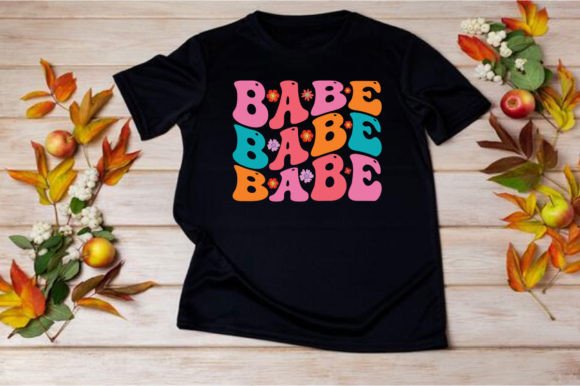
When I opened BABE SVG for the first time—intending to test it on a custom embroidered tote for a local boutique—I paused. It’s not flashy or overly ornate, but it carries a confident, warm energy. The letterforms are clean and slightly rounded, with subtle personality in the curves and spacing. There’s no excessive embellishment, no hidden flourishes—just clear, friendly typography that reads instantly as “BABE” without shouting. That matters more than you’d think in embroidery: clarity at scale, legibility after stitching, and emotional resonance in just three letters.
Where It Shines: Sweatshirts, Totes, and Thoughtful Gifting
I stitched BABE SVG onto a midweight cotton-blend sweatshirt using a 4” hoop and medium-cutaway stabilizer. The result? Crisp, balanced, and undeniably wearable. It sat cleanly on the left chest—no puckering, no distortion—and held up beautifully through two wash cycles. That’s the kind of reliability small business owners and Etsy sellers need: a design that looks intentional, not rushed.
It also worked surprisingly well on a linen-cotton tea towel—stitched with matte cotton thread in soft charcoal. Because the design isn’t dense or overly detailed, it didn’t overwhelm the fabric’s natural texture. Same goes for baby onesies: scaled down to 2.75”, BABE SVG retained its charm without turning into a muddy blob of satin stitch. For holiday embroidery or personalized gifts—think monogrammed aprons or nursery pillow covers—it adds just enough character to feel special, without leaning into trendiness that fades fast.
What It Does *Not* Do (And Why That’s a Strength)
- No fine serifs or micro-details — meaning fewer stitch-outs on delicate fabrics or tight corners.
- No overlapping layers or complex fill gradients — so less risk of shadowing or thread buildup on textured surfaces like terry cloth or fleece.
- No ultra-thin strokes or hairline elements — which means it avoids common pitfalls on stretchy knits or curved cap fronts.
Real-World Considerations Before You Stitch
Here’s what I checked before committing to client work—and what I recommend you do too:
- Test on scrap fabric first, especially if using dark or textured materials. BABE SVG relies on shape and proportion—not contrast alone—so it needs enough breathing room to read clearly.
- Review stitch density. While the file isn’t labeled, my test run showed moderate fill stitch coverage—ideal for apparel, but worth confirming if you’re planning heavy use on blankets or outdoor gear.
- Confirm hoop size compatibility. At standard chest placement (3.5–4”), it fits comfortably—but if you’re aiming for sleeve or pocket placement on a tank top or cap, check whether scaling down affects legibility.
- Inspect small details: the curve of the “B”, the counter space inside the “A”—these define the design’s friendliness. If those get lost in stitching, the whole vibe shifts.
- Try black-and-white mockups. BABE SVG works across light and dark backgrounds, but seeing it in grayscale helps spot unintended visual weight imbalances.
Fabric & Function: Where to Use It—and Where to Pause
BABE SVG excels on stable, medium-weight fabrics: cotton tees, canvas totes, twill aprons, and brushed poly sweatshirts. It holds up well on baby embroidery projects when paired with tear-away stabilizer and gentle tension settings.
Use caution on:
- Thin or slippery fabrics (like rayon challis or lightweight silk)—the clean lines can blur without proper underlay or topping.
- Highly textured surfaces (terry cloth towels, bouclé blankets)—fill areas may catch unevenly unless stitch density is adjusted.
- Curved or rigid substrates (structured caps, hard-shell drinkware)—it’s designed for flat or gently contoured surfaces; avoid forcing it onto steep curves without digitizing tweaks.
- Densely layered garments (double-knit hoodies with thick pockets)—test stitch penetration depth to avoid skipped stitches in lower layers.
How It Elevates Your Finished Product
This isn’t just another graphics file—it’s a quiet confidence-builder for your craft business. When customers see BABE SVG stitched cleanly on a handmade tote or a personalized sweatshirt, they register intentionality. No confusion, no second-guessing—just warmth, clarity, and craftsmanship. That builds trust faster than any tagline.
For Etsy sellers, it’s a strong candidate for bundle listings: pair it with coordinating minimalist icons (a heart, a star, a simple line-drawn flower) and position it as part of a cohesive “effortlessly bold” collection. As a digital embroidery file, it lends itself well to printable mockups—especially lifestyle shots where the design feels lived-in, not staged.
And for commercial embroidery shops? It’s a low-risk, high-return option for quick-turnaround orders—think boutique staff uniforms, school spirit items, or last-minute bridal party gifts. Its simplicity means faster hooping, fewer thread breaks, and consistent results across batches.
A Final Note for Designers & Sellers
BABE SVG sits comfortably in the T-Shirt Designs category, but don’t limit it there. Its strength lies in adaptability—not novelty. Whether you’re sourcing design assets for a new craft fair line or building a signature look for your handmade product brand, this is the kind of graphic that grows with you.
Just remember: always verify licensing before selling finished items or reselling the digital embroidery file. And if you plan to use it for applique design, running stitch outlines, or layered satin stitch effects, test those variations early—they’ll affect thread color choices, stabilizer type, and overall production time.
In short: BABE SVG isn’t trying to be everything. It’s trying to be *enough*—clear, kind, and quietly capable. And in real-world embroidery, that’s rare, valuable, and deeply practical.